CFO
Needed a real-time view of close health and forecast risk so they could quickly decide where attention was needed during period close.

I designed and shipped a new Oracle NetSuite review experience for month-end close. It replaced a static checklist with a clearer workflow that helps finance leaders spot blockers, assess risk, and act faster.
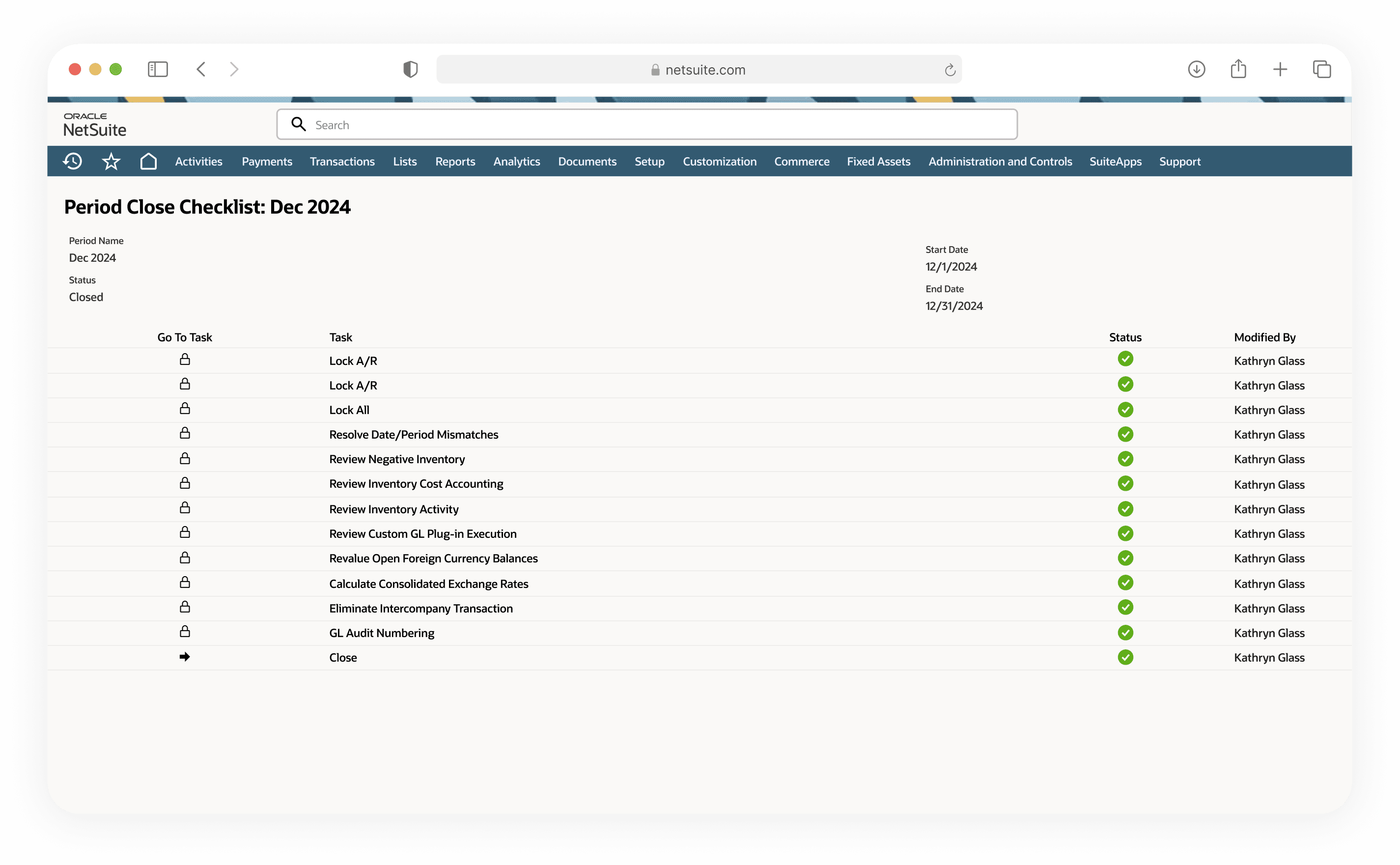
Month-end close review was spread across multiple tools.
A 0-to-1 Close Manager workflow inside Oracle NetSuite.
One guided review surface for blockers, risk, and task assignment.
Owned the core UX from concept exploration through handoff.
Month-end close is a high-stakes workflow with a short decision window.
Finance leaders need fast, reliable answers about what is blocked, what is material, and where to act next.
3 months
PM, engineers, and finance SMEs
CFOs, controllers, and accountants
I owned the core UX from concept exploration through developer-ready handoff. I drove the shift from a static checklist to a real-time review experience, aligned the direction with PM, engineering, and SMEs, and delivered the final interaction model and specs.
Review experience, AI summaries, workflow states, handoff specs
Needed a real-time view of close health and forecast risk so they could quickly decide where attention was needed during period close.
Needed to manage and expedite period-close tasks, identify exceptions quickly, and keep financial reporting accurate and on schedule.
Needed clearer task ownership, reminders, and due-state visibility so work could be completed on time without relying on manual follow-up.
Finance leaders were checking status in multiple places, chasing updates, and piecing together what was holding the close up instead of moving it forward.
Finance leaders were stitching close status together manually before they could decide what to do next.
I kept the public process to the three design moves that most changed the outcome: separating insight from action, improving comparison, and then resolving scale.
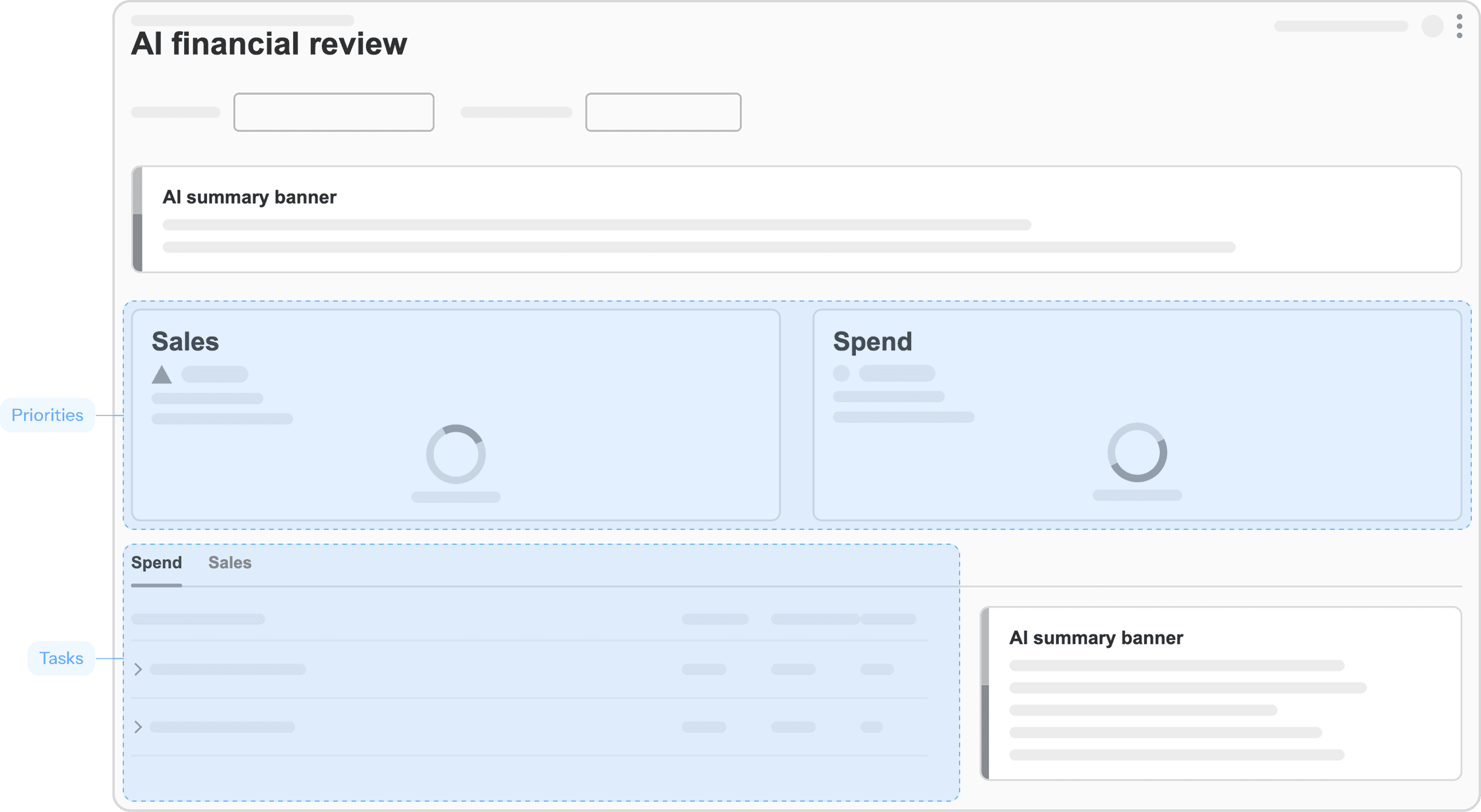
The initial direction looked comprehensive, but it made users connect risk to action on their own.
Overview, insight, and task detail all lived in separate zones, so finance leaders had to scan back and forth to understand what actually needed action.

Close health was visible, but too detached from the work that needed attention.
The summary sat beside the flow instead of guiding the next step.
Users still had to translate risk into tasks on their own.
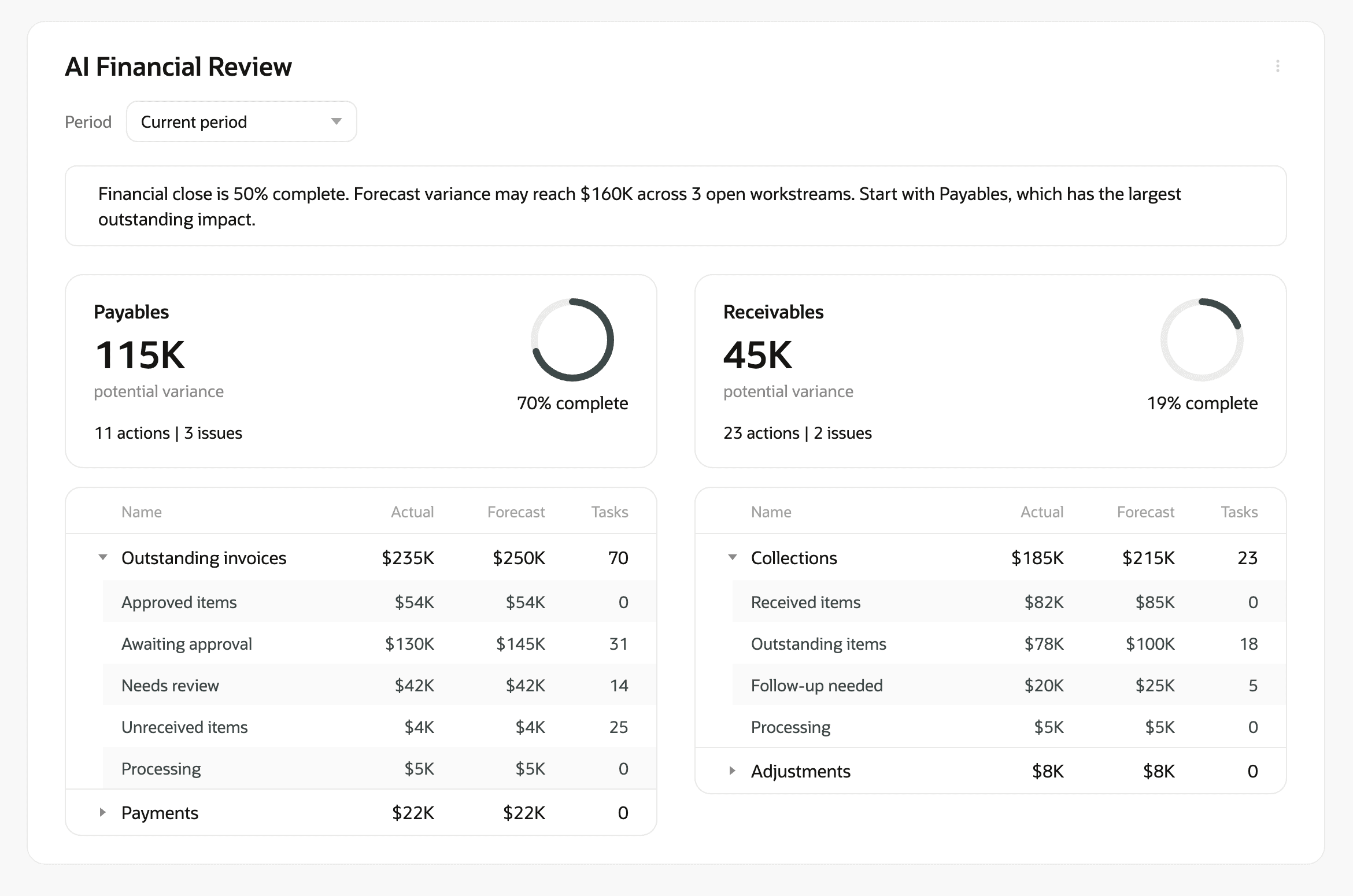
The two-column version made payables and receivables easier to compare side by side, and it brought summary and detail closer together. But it depended on the screen staying small and symmetrical, so it could not scale once more categories and richer AI states were added.

This was the first direction that made progress easier to compare, but it still did not establish a scalable review flow.
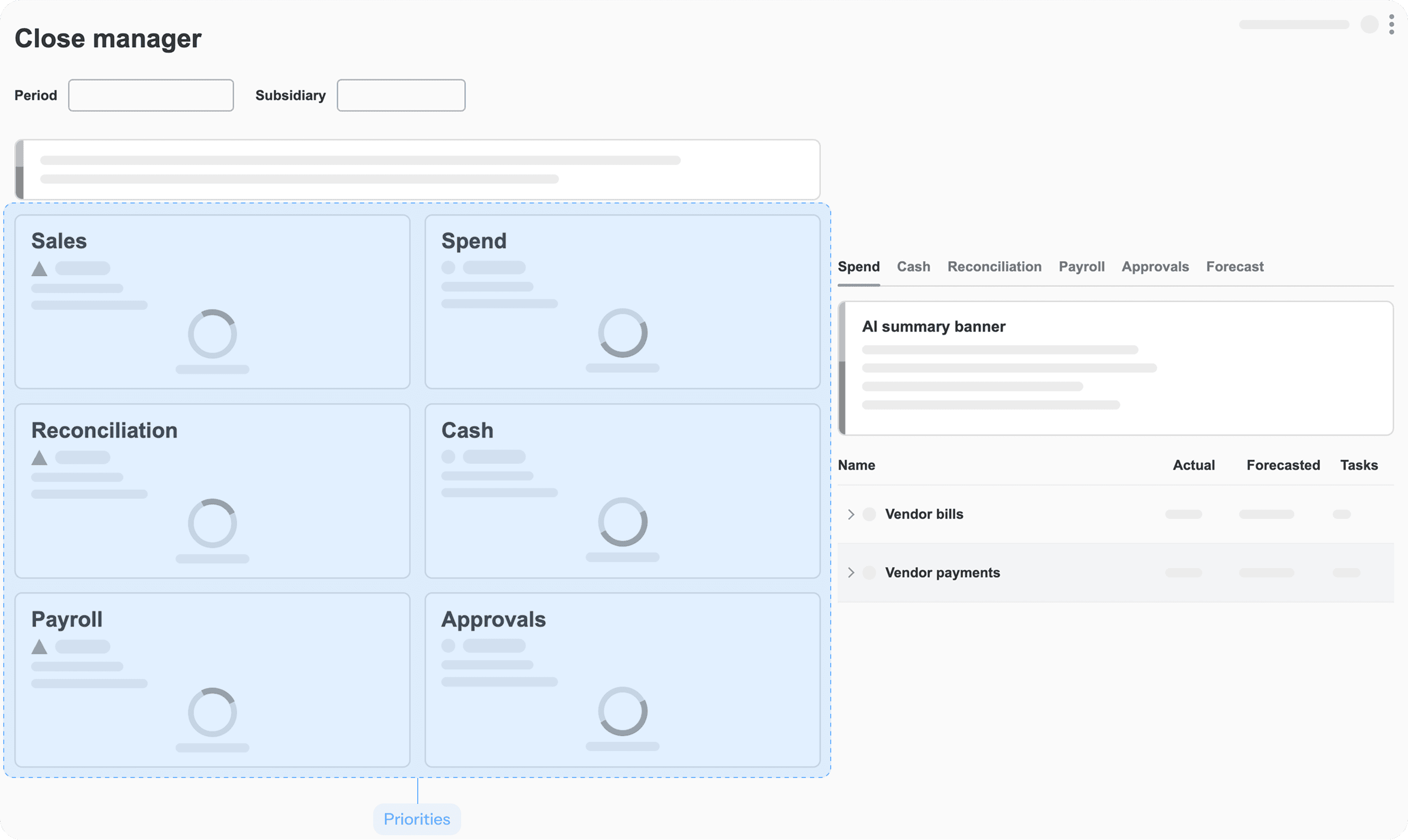
Adding more category cards and parallel AI summaries increased visibility, but it flattened hierarchy and made the next action less obvious.

Too many categories competed at once.
AI insight no longer had a clear place in the flow.
More visibility was useful, but not if the next action disappeared.
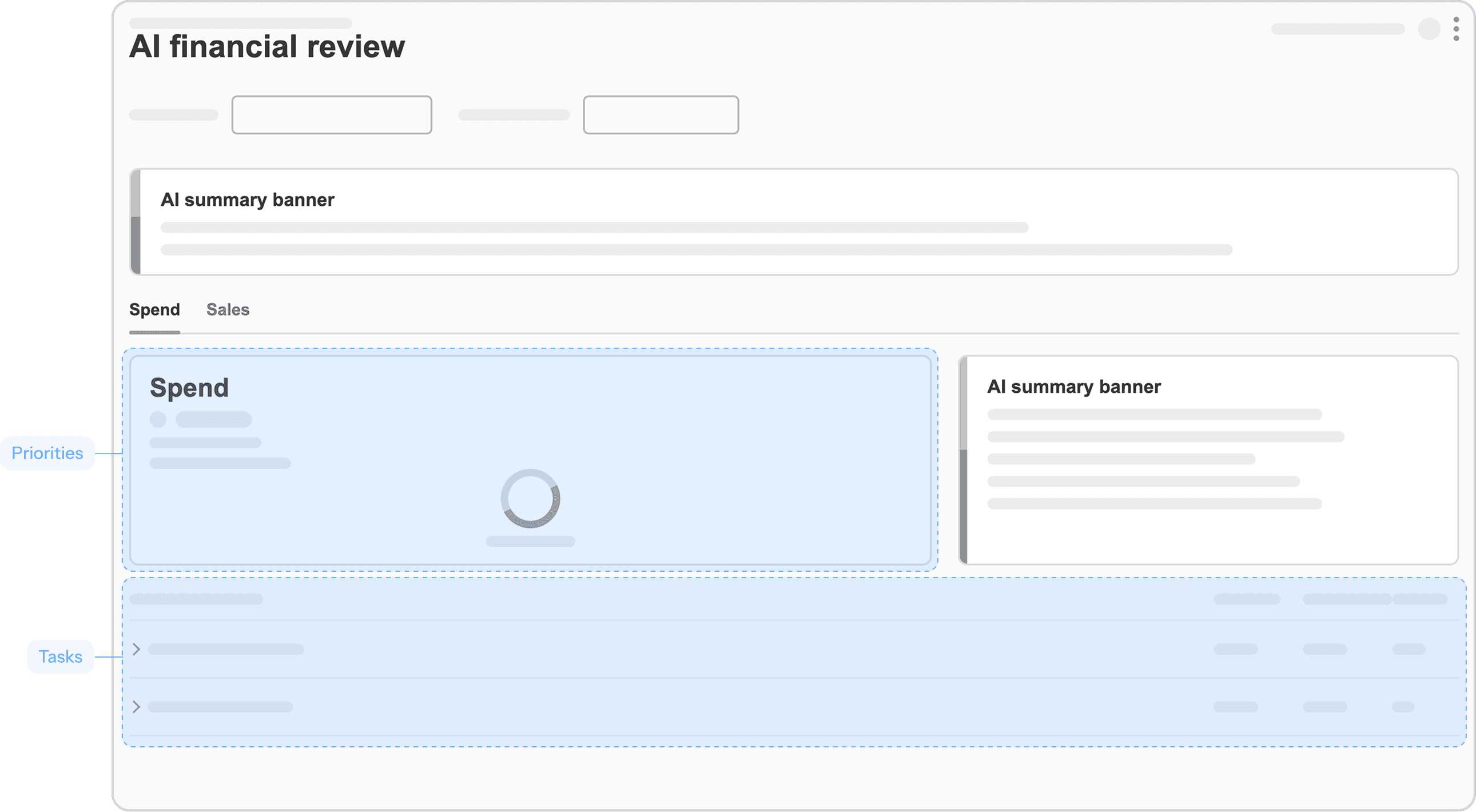
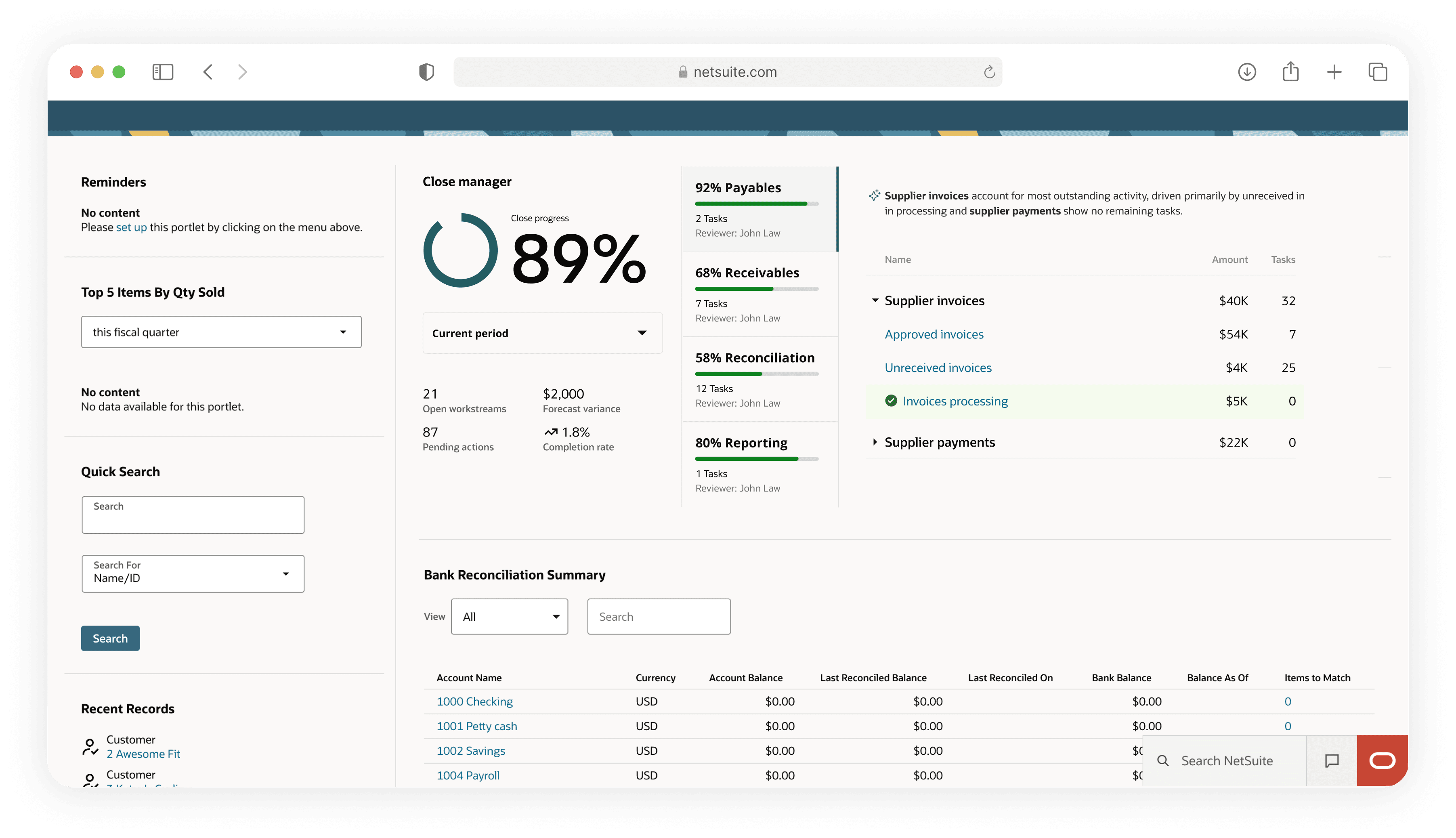
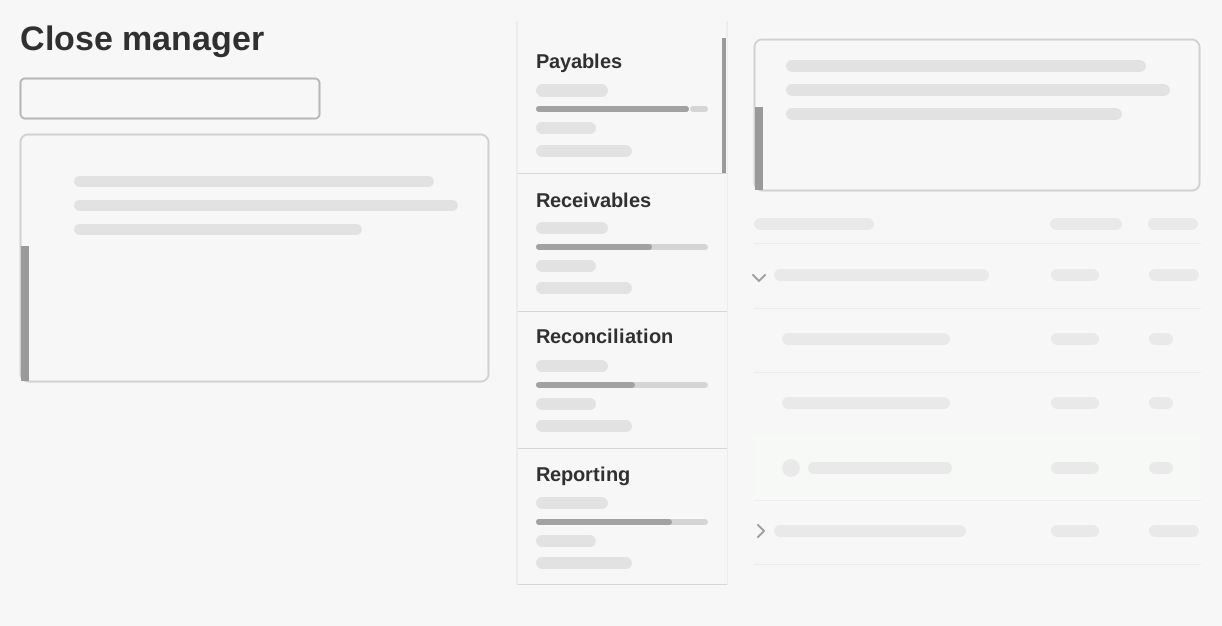
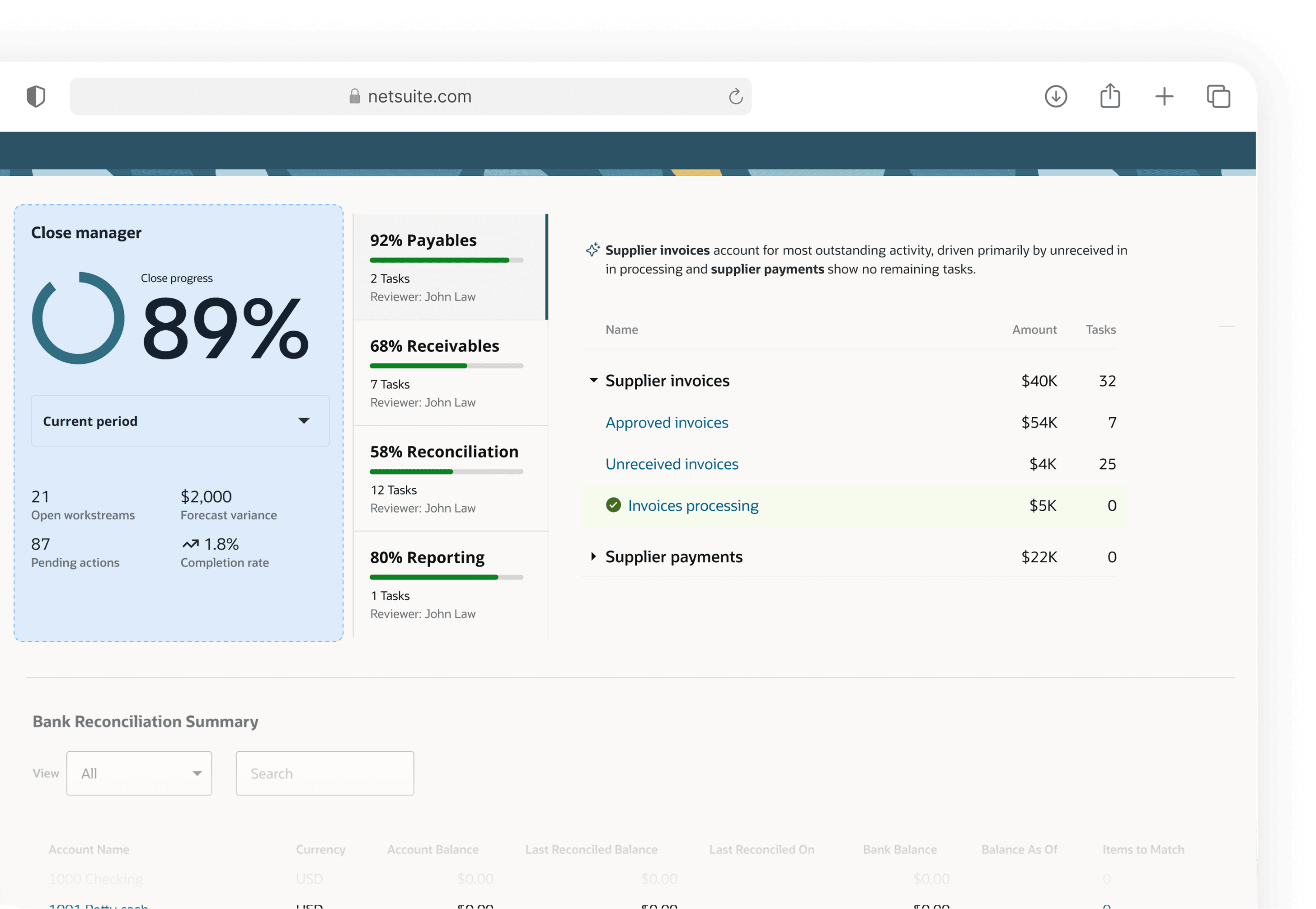
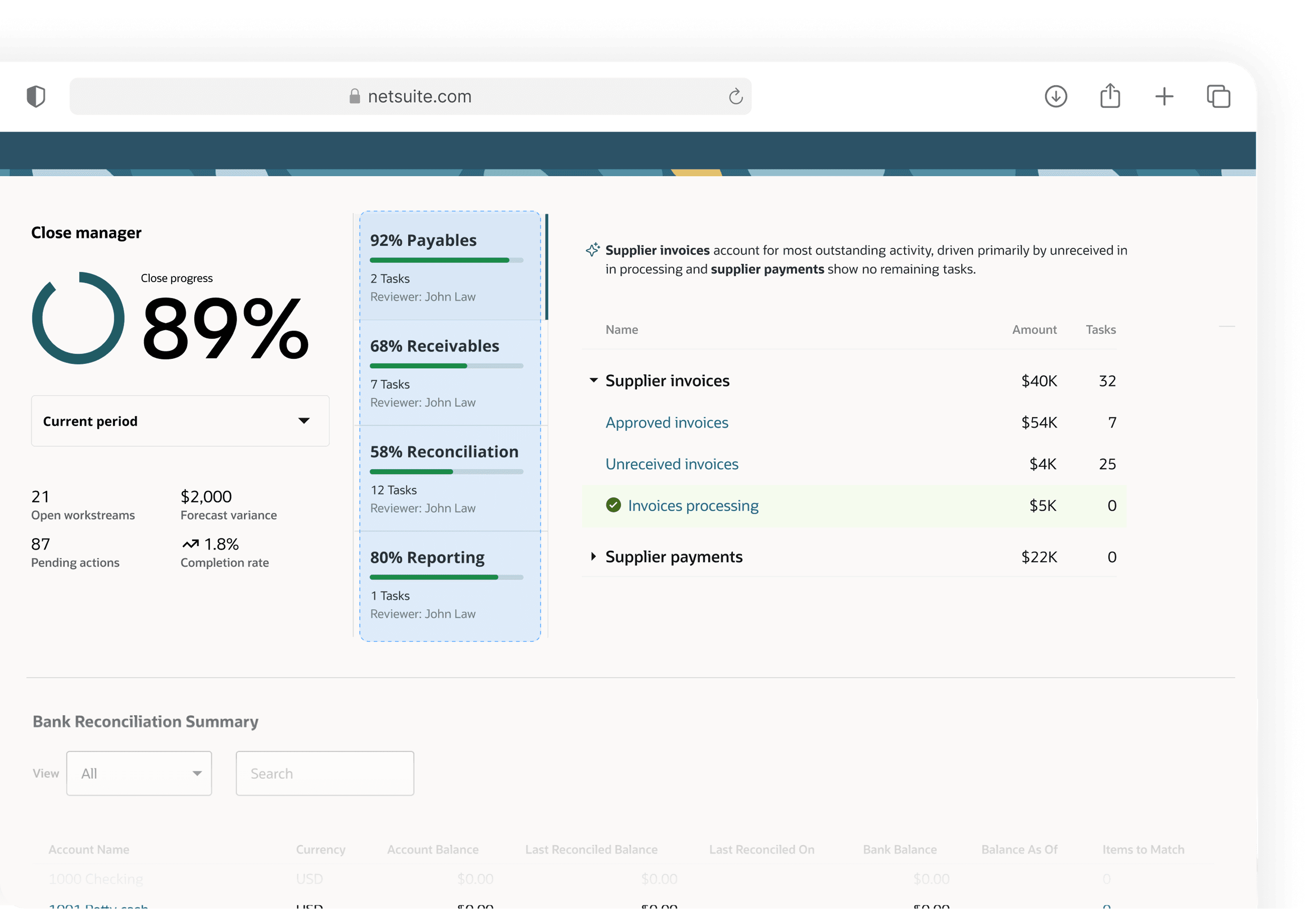
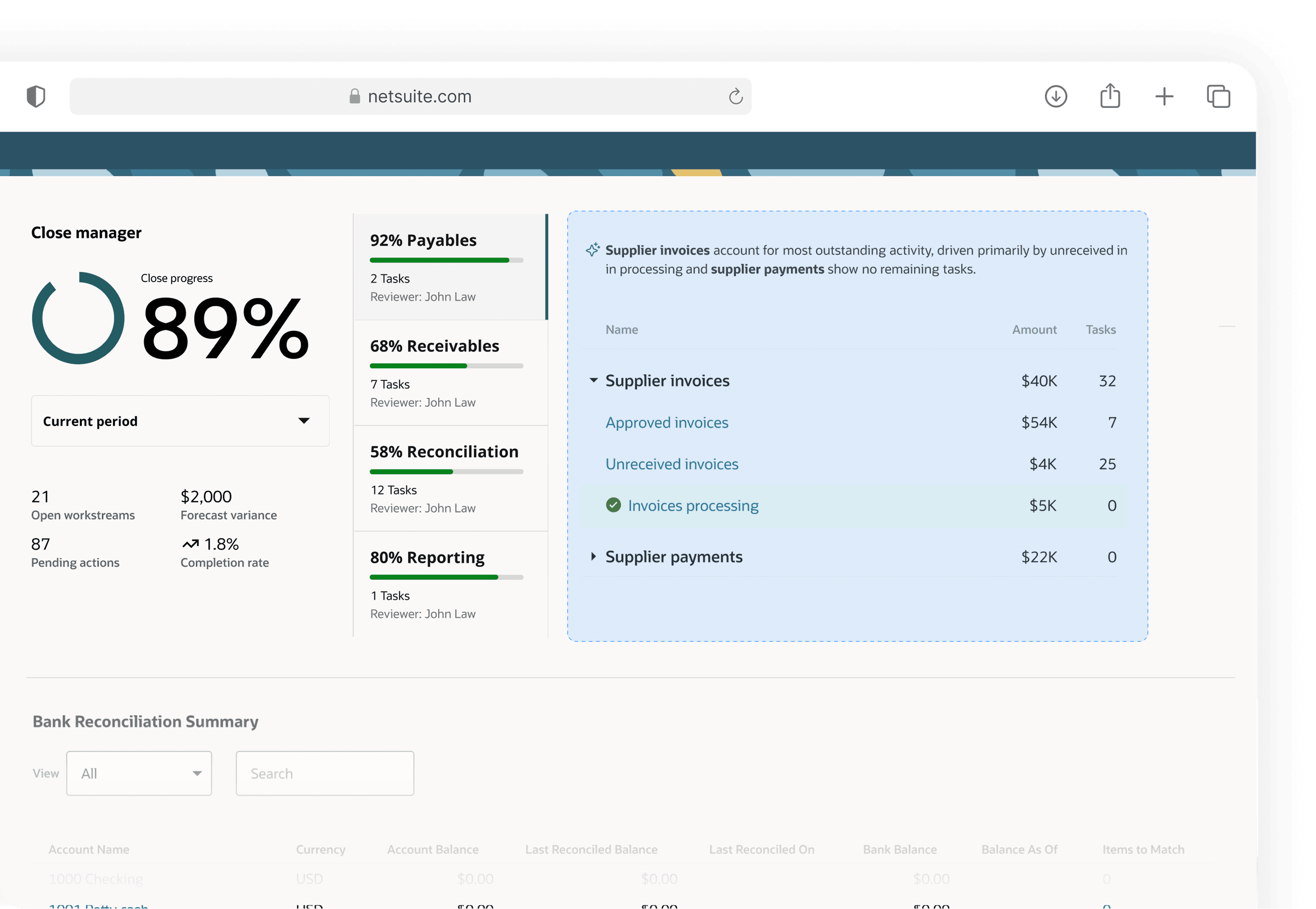
The experience brought close health, the highest-priority issues, and task assignment into one workflow so teams could close the books on time without the usual end-of-month stress.

Overall close health stayed visible.
The middle column kept the current workstream in focus.
Task detail stayed adjacent to the summary.
Use AI to prioritize and explain risk, not automate financial decisions.
This gave finance leaders speed without losing trust or auditability.The AI did not make the decision. It helped finance leaders understand where to look before they took action.
The AI pointed to what mattered first. Finance leaders still verified the source and made the decision.
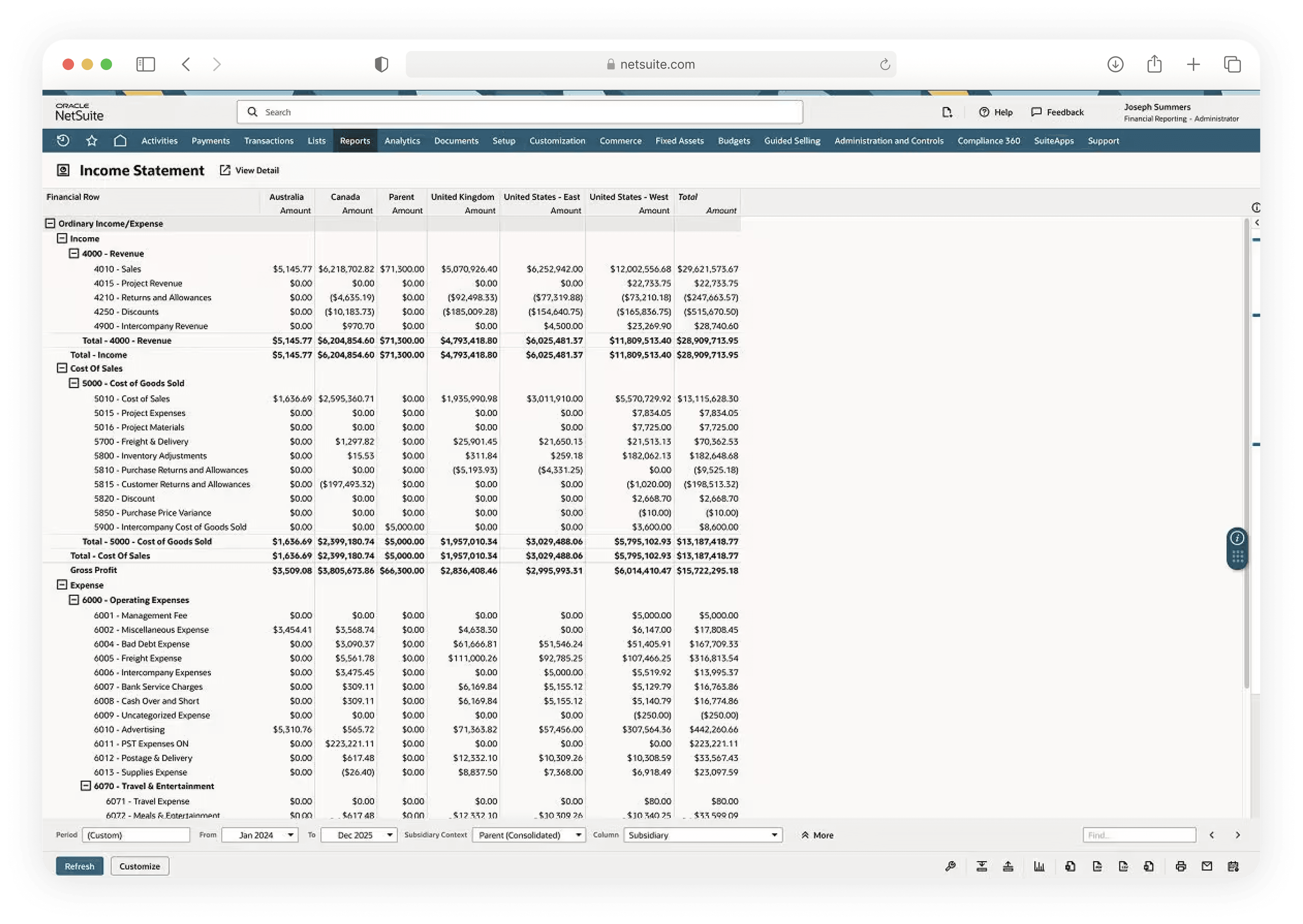
Financial report data from accounts payable and receivable, along with close-status signals from category workflows.
A concise summary of close health and the specific areas that needed attention.
Finance leaders could verify the summary through linked report sources before taking action.
Because these were high-stakes financial decisions, the AI highlighted what needed attention while the decision and action still stayed with finance leaders.
The outcome was a live review experience that gave finance leaders one place to assess close health, understand risk, and move work forward before the end-of-month scramble.
Close Manager workflow shipped inside Oracle NetSuite
for close health, priorities, and task assignment
AI guidance stayed explainable before finance leaders acted
Replaced a manual multi-place checklist with a live review workflow.
Made blockers, ownership, and next action visible in one workflow.
Established a scalable pattern for AI guidance in an auditable enterprise product.
This project taught me that the hardest part of enterprise AI design is not adding more information. It is deciding what should stay visible, what should collapse, and what needs to become action.